
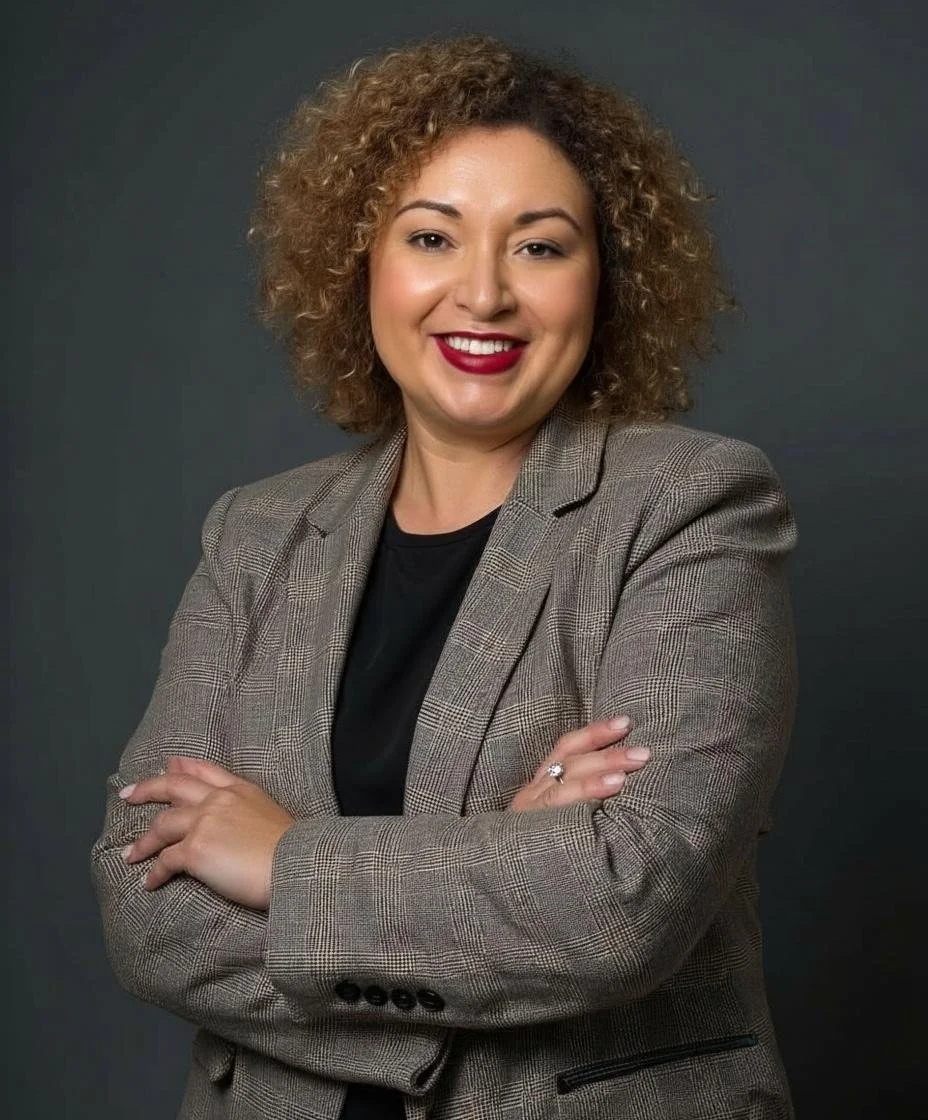
Meet the Founder
I am Jayde Fuller, a Gamilaraay woman. That is where this practice begins.
Gamilaraay Country spans what is now northwest New South Wales - a sovereign territory with its own law, knowledge systems, and ways of understanding the relationship between people, community, and accountability. It is from this grounding that I approach regulatory practice: not as a technical discipline imported from outside, but as an extension of the responsibility Indigenous Peoples carry to protect their communities.
This is not incidental to the work.
It is the epistemological foundation of it.
Why this practice exists
Systems-level change for cultural safety in healthcare cannot be done in isolation. For Indigenous Peoples, it cannot be done outside of collective - we think, strategise, and are accountable through relational structures that colonial institutions were not designed to accommodate.
When I began my career in health regulation, no Indigenous regulatory collective existed. I built one myself, reaching across colonial borders to connect with Indigenous regulatory practitioners in Aotearoa (New Zealand) and Turtle Island (United States of America and Canada) - people navigating the same irreconcilability between Indigenous sovereignty frameworks and the whiteness that shapes most regulatory infrastructure. That global community became both a source of strength and the proof of concept for what would eventually become IRCoP.
Working from a place of grounded Indigenous sovereignty within regulatory institutions is genuinely difficult. When the people around you do not epistemologically relate to your framework - when the institutional logic you are asked to operate within was built to serve a different worldview entirely - the labour of change is compounded by the labour of translation. And translation, sustained over years, is its own kind of harm.
Independent practice is the answer to that irreconcilability. It is the structure through which I do this work on sovereign terms - accountable to community, rigorous in method, and free from the institutional dynamics that constrain what is possible.
Intellectual formation
In 2025, I completed a Master of Social Change Leadership with First Class Honours through the Atlantic Fellowship for Social Equity at the University of Melbourne. It was through this program that I conceptualised, developed, and sourced funding for IRCoP - grounding the community of practice in rigorous social transformation methodology from its inception.
In 2010, I graduated from the University of Queensland with a Bachelor of Arts, double majoring in Aboriginal and Torres Strait Islander Studies - a multidisciplinary program spanning politics, law, linguistics, anthropology, creative arts, archaeology and history. This is the intellectual formation through which I read evidence. It is not a credential threshold; it is the theoretical architecture I bring to the analysis of regulatory systems and cultural safety frameworks - built in the sovereign knowledge traditions of Country, not in the disciplinary assumptions of Western health sciences. My analytical practice was shaped by Indigenous Elders and scholars, and that formation has direct continuity with the anti-racism and cultural safety work I later carried into regulatory practice.
Professional foundation
I bring fifteen years of experience at the intersection of Indigenous health policy and national regulatory frameworks. As former National Director at the Australian Health Practitioner Regulation Agency (Ahpra), I led the implementation of Australia's first national cultural safety strategy across sixteen health professions - a world-first for a health practitioner regulation agency, and a landmark in the use of legislation and practice standards to enforce cultural safety as a practitioner obligation rather than an aspiration.
That experience produced a clear analytical conviction: aspirational compliance does not work. Cultural safety in healthcare is not achieved by asking practitioners to want to do better. It is achieved by making racism in healthcare practice professionally and legally consequential - through accountability mechanisms embedded in licensing conditions, codes of conduct, and the legislation that governs health practitioner registration. The 2023 landmark tribunal decision disqualifying a medical practitioner for anti-Indigenous racism was not an accident of goodwill. It was the result of deliberate regulatory architecture.
That is the kind of change this practice exists to build.
Values and how this practice operates
Indigenous Regulatory Practice is structured as a business of one - deliberately.
Sovereignty is not only a political position; it is an organisational one. This practice is accountable to my community, my knowledge systems, and my own judgment about what work is worth doing and with whom.
It operates on a values-driven financial model. Surplus profit is redistributed to Land Back initiatives rather than accumulated as personal wealth. This is a statement about what this practice is for: not the extraction of value from Indigenous expertise, but the reinvestment of that value into the material conditions of Indigenous sovereignty.
I do not work with every organisation that approaches me. Client selection is governed by a straightforward question - does this organisation have the structural readiness and genuine institutional will to do what transformation actually requires? Organisations seeking validation, optics, or a cultural safety provider they can point to without changing anything are not the right fit.
International Regulatory Community of Practice on Indigenous-specific racism (IRCoP)
The isolation I experienced as an Indigenous regulatory practitioner in the early years of my career became the motivation for the Indigenous Regulatory Community of Practice on Indigenous-specific racism - IRCoP.
Conceptualised and developed as my Masters project at the University of Melbourne, and now in active implementation with seed funding secured through the Atlantic Fellowship for Social Equity, IRCoP exists because Indigenous regulatory practitioners across Australia, Aotearoa (New Zealand), and Turtle Island (United States of America and Canada) are doing structurally similar work in conditions of similar isolation - surrounded by non-Indigenous colleagues, operating within institutions shaped by whiteness, and carrying the weight of community accountability without the collective infrastructure to sustain it.
IRCoP is the collective that didn't exist when I needed it. It is a sovereign knowledge community - not a professional network in the conventional sense, but a space grounded in Indigenous epistemology where regulatory practitioners can think together, strategise together, and hold each other accountable to the communities we serve.
Regulatory bodies can support IRCoP through organisational membership, ensuring Indigenous practitioners in their workforce have access to the collective infrastructure that institutional employment rarely provides.